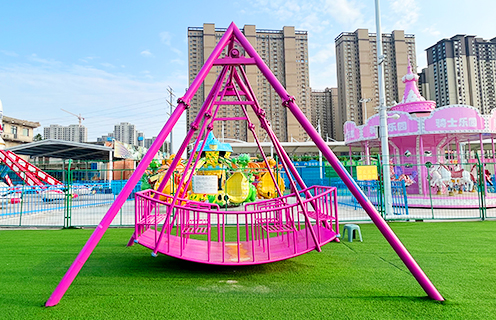
The clips run through the full swing range: the standard pirate ship, a mini version for small parks, a mini snow version built for winter theming, the 32-seat and 40-seat models, and a non-electricity unit that swings without a motor. The swing is the same idea at every size —a gondola on an A-frame, driven until it reaches its arc —but the site requirements are not.
A mini ship suits a family park where the ride has to sit beside a carousel and a kids train; the 40-seat model is a headline attraction that needs a clear approach, a defined queue and a foundation sized for the reversing load. Between them, the 32-seat unit is the model most parks settle on when the ship is meant to be a strong second ride rather than the park's signature.
Without a motor, the ship is driven by the riders' own weight shift. That removes the power supply and the drive maintenance, and it changes the ride from an operated attraction to a play structure that runs continuously.
A pirate ship loads from one side and swings across the other, so the station and the exclusion zone are not symmetrical. The queue has to stay outside the arc, which usually means the boarding platform is set to one end of the foundation rather than in the middle. That single layout decision is visible in every clip of a well-sited ship.
Pirate ship category · Pirate ship · 40P pirate ship · Mini pirate ship
Tell us the ride type, site size and target opening date. We reply within one working day.