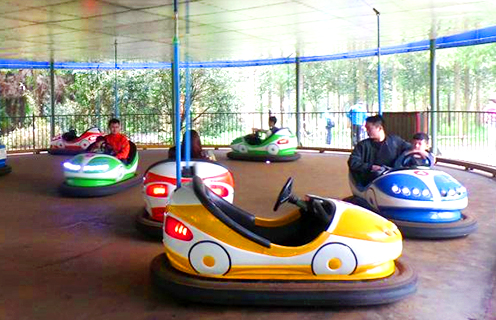
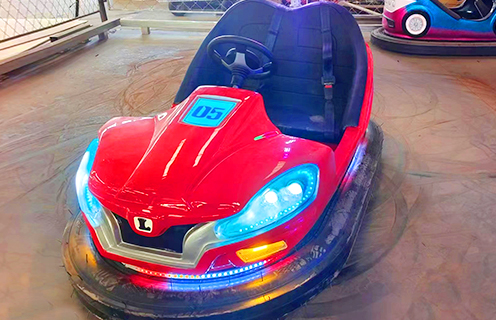
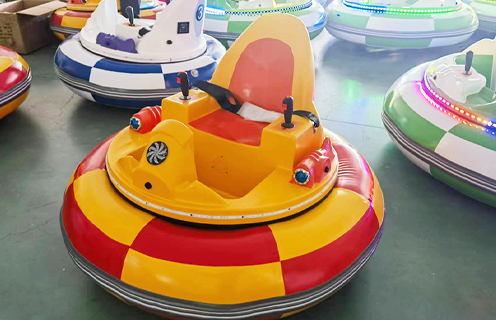
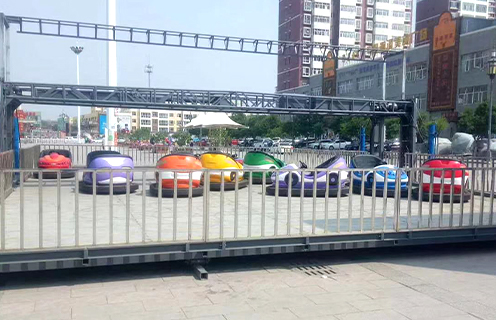
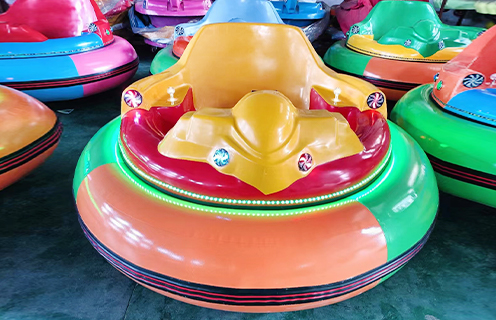
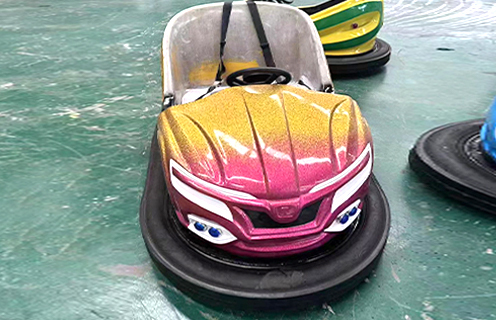
The range in these clips splits first by how the cars get their electricity. A ground-grid car picks up power from strips set into the floor, which means channels, contact strips, a dedicated supply and a panel before the first car moves. A battery car carries its own power and needs only a flat surface and a charging point. On film the difference is obvious: one is a construction project, the other is a hall with cars in it.
Ground-grid cars come in classic, floorless and sky-net versions, all intended for a permanent arena. Battery cars cover events and leased buildings where the floor cannot be cut. Ice cars are built for seasonal rinks, portable two-seat cars for operators testing a new site, and the fordable model folds for transport between venues.
The usual mistake is to choose the car first. Start with the floor: if it can be cut and drained, a grid arena gives the most durable ride and the lowest car cost. If it cannot, the battery fleet removes the civil works entirely and the ride can move when the lease ends.
Bumper cars category · Battery bumper cars · Classic grid bumper car · Portable bumper car
The two-seat bodies measure about 1.95 m by 1.15 m by 0.96 m, so the arena is laid out around car size rather than car count alone.
48 V, with motors from 230 W to 500 W. The higher figure appears on the four-car set listings.
Up to 20 km/h where the sheet gives a figure. Running speed is set by the operator's procedure and the arena surface.
One unit is listed at 250 kg, which matters for floor loading and for how the fleet is moved into storage.
Tell us the ride type, site size and target opening date. We reply within one working day.