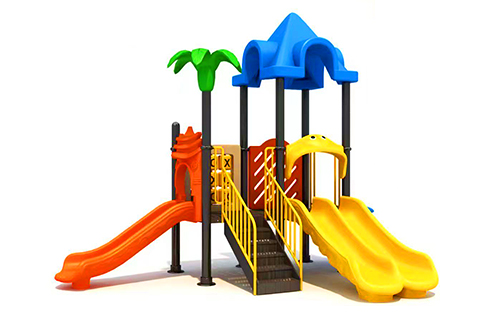
Modular play structures for parks, schools, housing developments and municipal projects. Each is assembled from standard components — platforms, slides, climbing nets, bridges — so the layout is drawn to the site and the parts come from a fixed range.
The site plan, the target age group and the number of children using it at peak. From those three we can propose a layout and a parts list — the structure is not a fixed SKU, so the drawing comes before the price.
An outdoor playground is designed around two things the structures do not include: the safety surface and the age zones. A climbing frame for six-year-olds and a tower for twelve-year-olds need different fall heights and different surfacing, so the layout is usually split rather than mixed.
Level ground, drainage and a boundary. The structures are supplied to the layout, while the surfacing is normally a local contract — which is why the installation drawings specify it separately.
Non-powered play equipment · Water playgrounds · Indoor soft play · All non-powered equipment
Tell us the ride type, site size and target opening date. We reply within one working day.