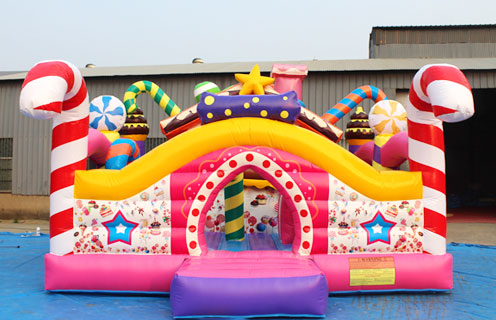
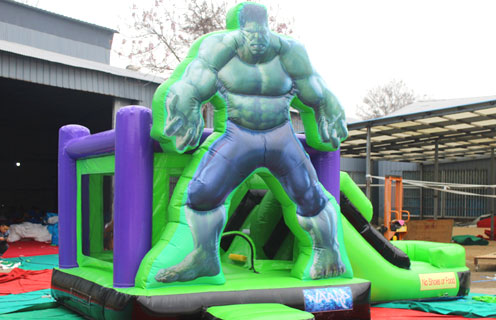
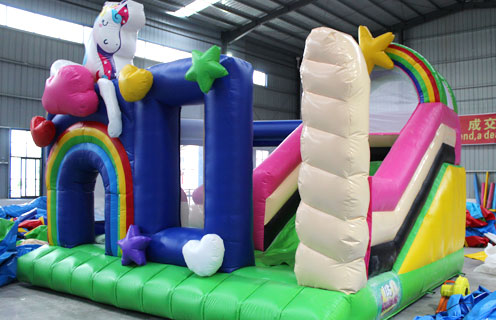
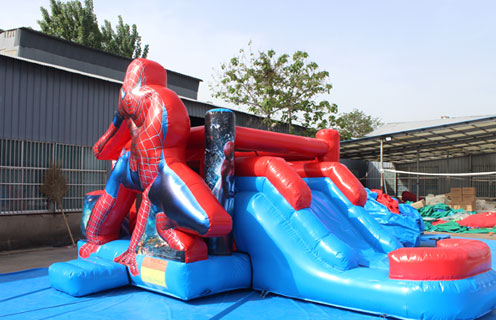
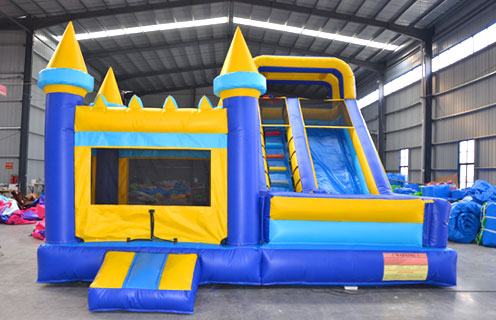
The inflatable bouncer range is small and specific. The classic bouncer is the castle shape most operators start with; the kids version scales it down for toddlers; the daily bouncer is built for venues that inflate it every morning; the compact unit fits a hall or a courtyard; and the bounce house version adds a covered roof for wet weather.
On an inflatable, the seams and the anchor points fail before the material does. A unit that is inflated and deflated daily needs heavier stitching at the stress points than one that stands for a season, which is the real difference between the daily and classic models. The blower is a separate wear item: it runs continuously and is the part most likely to be replaced first.
The bouncer needs a flat surface, a power point for the blower and a clear safety perimeter. It is also the one product in the range where supervision, not engineering, sets the age limit —which is why the kids model is specified separately from the adult one.
A deflated bouncer rolls or folds into a fraction of its inflated size, which is what makes the product work for an events operator. The storage question is damp: a unit packed away wet will grow mould in the seams, so the practical routine is a drying day before storage and a dry floor to pack on.
Inflatable category · Classic inflatable bouncer · Daily inflatable bouncer · Compact inflatable bouncer
Tell us the ride type, site size and target opening date. We reply within one working day.